American Traditional Tattoos | Red Arbor Tattoo Sioux Falls
What Is an American Traditional Tattoo?
An American traditional tattoo is a style built on bold black outlines, a limited color palette, and designs that read clean from across the room. The colors are simple. Red, green, yellow, black, and sometimes blue or brown. The lines are thick and the shading is packed solid, which is a big part of why these tattoos still look beautiful forty years later when other styles have turned into blurry gray smudges.
There’s a refined beauty to traditional work that’s easy to miss if you’ve only seen it in passing. The designs look simple, and they are simple in the sense that there aren’t a hundred colors or tiny details competing for attention. But that simplicity is the point. Every line is deliberate, every color choice is intentional, and when the whole thing comes together on skin it has a clean elegance that busier styles can’t touch. Traditional tattoos are timeless by design. The rules that made them look good in 1950 are the same rules that make them look good now, and they’ll be the same rules that make them look good in another fifty years.
The subject matter pulls from a library of images that tattoo artists have been refining for over a hundred years: eagles, panthers, roses, skulls, daggers, anchors, snakes, and pin-ups, among others. “I’ve seen traditional tattoos on people in their seventies that still look beautiful,” says Cory Claussen, owner of Red Arbor Tattoo in the Sioux Falls area.
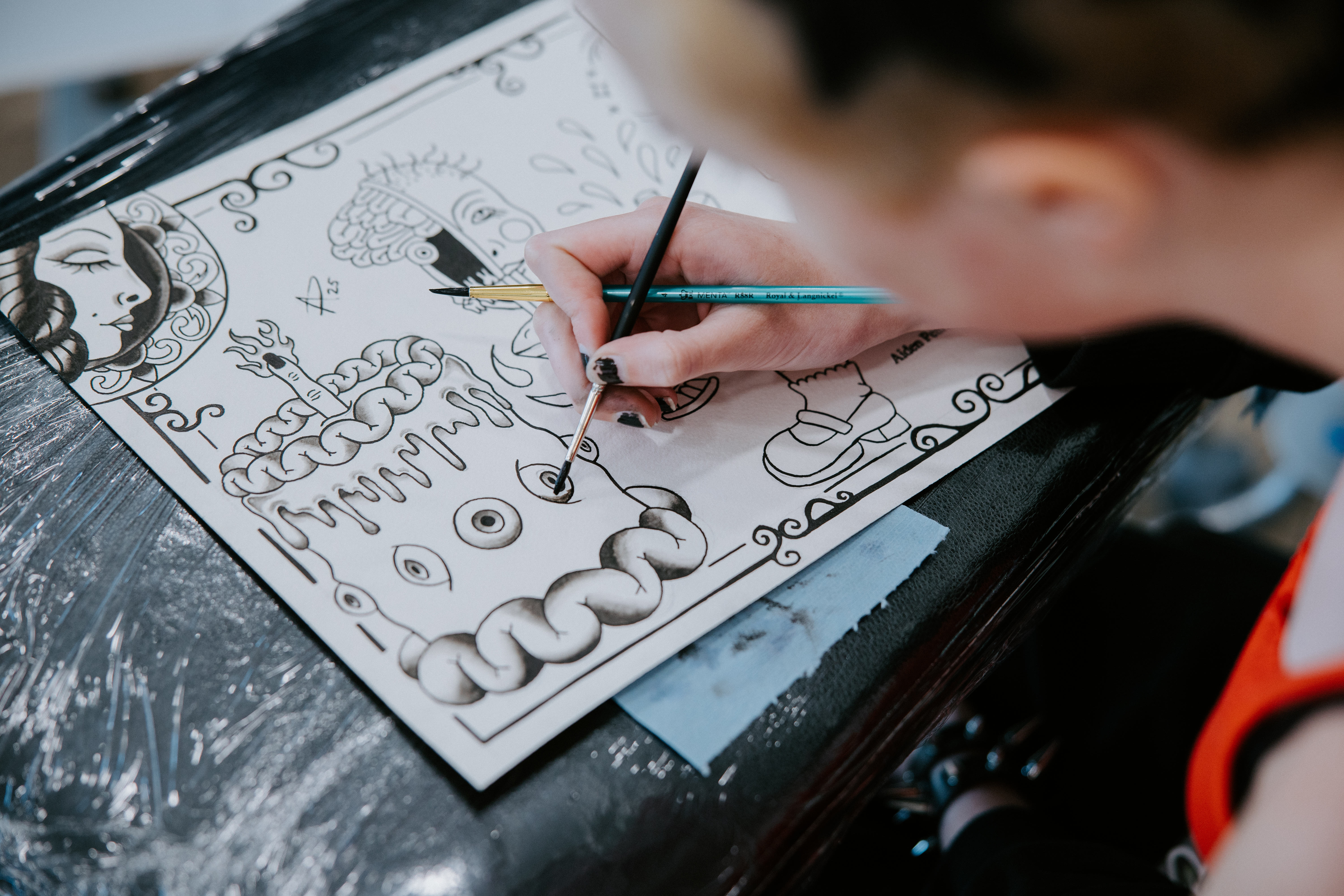
At Red Arbor Tattoo, American traditional is one of the styles the shop tattoos most often. Cory has been tattooing traditional work for over a decade, and Aiden Pearson is specifically focused on American traditional and hand-painted flash. The rest of the team, including Libby Murphy, Savannah Layne, Mia, and Lauren, all do quality work across a range of styles, but traditional has a deep root at this shop.
Where Did American Traditional Tattoos Come From?
American traditional tattooing started in the early 1900s, mostly around military ports, navy bases, and carnival sideshows. Sailors wanted tattoos before they shipped out. They didn’t have time to sit for eight hours, and they didn’t care about photorealism. They wanted something bold, something that looked strong, and something that could be done in one sitting.
That’s where flash came from. Tattoo artists created pre-drawn designs, called flash sheets, that hung on the walls of their shops. A sailor would walk in, point at an eagle or an anchor or a pin-up, and sit down. Lew Alberts, a tattooer working in New York City’s Bowery district in the early 1900s, is widely credited with popularizing flash sheets and getting them into the hands of other artists. Percy Waters out of Detroit built a major mail-order flash supply business that spread those designs across the country. And artists like Sailor Jerry Collins, Bert Grimm, Cap Coleman, and Owen Jensen kept refining the imagery and the techniques along the way.
The designs were built for speed and durability, with heavy outlines and a small set of colors that held up in skin over years of sun, salt water, and hard living. The style kept evolving through the mid-century. Artists refined the shapes, balanced the compositions, and developed techniques for packing color that still work today. But the bones of the style haven’t changed much since the 1940s and 50s. That’s part of what makes it traditional. It’s one of the few tattoo styles where the old rules still apply, because the old rules still work.
“When I look at flash from the 1950s, the drawing is still good,” Cory says. “The bold contrast, the dynamic images, the saturation. Guys were doing that seventy years ago and it still holds up next to anything being tattooed today. There’s a reason people keep coming back to it.”
What Colors Are Used in American Traditional Tattoos?
The American traditional tattoo color palette comes from what was available to tattoo artists in the early 1900s. Black, red, green, yellow, and sometimes blue or brown. That was what they had to work with, and it turned out those colors, packed solid inside bold outlines, are specifically what holds up best in skin over decades. The artists who built this style kept it simple based on the tools they had, and they ended up creating a formula that still works better than most modern approaches for longevity.
Artists today still use that same limited palette. Partly to honor the style’s roots. Partly because there’s no reason to change what has worked for over a century. Black holds the longest. Red and green hold well too. “I tell people upfront that yellow is going to soften before anything else does,” Cory says. “It still looks good. It’s a different kind of good at year ten than it is at week two. That’s why I use yellow for highlights and small accents rather than packing a big area with it.”
Some people ask about black and grey American traditional tattoos, and yes, that works too. Dropping the color and going full black and grey gives a traditional piece a different feel. Heavier, moodier. It works especially well for skulls, daggers, and reaper-type imagery. Black and grey traditional is a strong look on its own.
What Are the Most Common American Traditional Tattoo Designs?
American traditional tattoo designs pull from a set of images that have been part of the style since the beginning. Each one carries its own history, but the designs also stuck around because they’re visually strong. Clean shapes, good contrast, and compositions that sit well on skin.
Traditional Eagle Tattoos
Spread wings, talons out, head turned to one side. That’s the eagle. It’s a powerful image and every artist has their own spin on it, making each one unique to the client while still honoring those who came before.
Eagle tattoos were popular with military service members from the very beginning and they still are. The design works well on arms, chests, and backs, anywhere with enough room for the wingspan to open up and fill the space.
Traditional Panther Tattoos
Crawling panther. Claws out, mouth open. The whole design is tension and movement.
“The crawling panther is one of those designs that works on a body in a way that’s hard to explain until you see it,” Cory says. “The way the shape wraps around an arm or a leg, it follows the curve of the muscle, and it reads well from any angle.”
Cory has had people come in asking for something else entirely, see the panther on the flash wall, and change their mind on the spot. The design goes back to the 1930s and 40s. A panther crawling up a bicep or wrapping around a calf sits well on the body, and Cory has tried to figure out what other animal would have that same visual effect in the same pose and hasn’t found one. The proportions, the long body, the low crouch, the extended claws, fit the shape of a human arm in a way that the old-school artists who drew the original panther flash clearly understood.
Traditional Rose Tattoos
Roses show up everywhere in traditional tattooing and for good reason. A red rose usually ties to love or passion. A rose with a dagger through it means sacrifice or loss. And roses pair with almost any other traditional element, skulls, snakes, hands, banners, which is why they show up in so many compositions. They work as filler, as a centerpiece, or standing alone on a wrist or forearm.
Traditional Flower Tattoos
Beyond roses, flowers are the most commonly tattooed design at Red Arbor. Chrysanthemums, peonies, lotus flowers, and daisies all show up in traditional work, and each one carries different weight depending on how it’s used. Chrysanthemums have deep roots in Japanese tattooing but cross over into American traditional all the time, especially when paired with skulls or snakes. Peonies add a softer, fuller shape that fills space well on upper arms and thighs.
“People sometimes think traditional means you’re stuck with the same ten designs,” Cory says. “But flowers alone give you dozens of directions. And a good flower tattoo, done bold with clean lines and saturated color, is one of the best-aging pieces you can get.”
Traditional Skull Tattoos
A skull is a reminder that everything ends. That’s it. Skull designs pair with roses, daggers, snakes, flames, and crossbones, and the basic shape works at almost any size on almost any body part. There’s always a spot where a skull fits.
Traditional Snake Tattoos
Snakes have been in the flash rotation for over a century. They represent danger, transformation, protection, or rebirth depending on the context and composition. Coiled around a dagger, twisted through a rose, wrapped around a skull, or drawn as a standalone piece. The shape of a snake gives artists a lot of freedom with placement because it can flow with the body or sit contained in a smaller space, and that flexibility is a big part of why snakes keep showing up in traditional work decade after decade.
Traditional Tiger Tattoos
Bold, colorful, and one of the more eye-catching designs in the traditional lineup. The tiger usually shows up head-on or in a crawling pose similar to the panther, and it gives the artist more room to work with color. Orange, black stripes, yellow accents, green leaves in the background.
“I’ve always liked tattooing traditional tigers because the contrast between the orange and the black stripes gives the piece depth before you even start shading,” Cory says. “And because traditional style keeps the detail tight and the color saturated, the stripes pop harder than they would in a more rendered style.” More detail doesn’t always mean better. Sometimes simpler hits harder, like when you hear a song played on one acoustic guitar and it sounds better than the full band version.
Traditional Dragon Tattoos
Dragons sit right at the line between American traditional and Japanese tattooing. In American traditional, dragons tend to be simpler with bold outlines and limited color, though that’s not a hard rule. They work well for larger pieces, back work or sleeves, because the body of the dragon follows the curves of the person wearing it, similar to the snake. Red Arbor has a strong background in both American and Japanese traditional work, so blending those influences is something the artists do regularly.
What’s the Difference Between Traditional and Neo-Traditional Tattoos?
A neo-traditional tattoo takes the foundation of American traditional, bold outlines and iconic imagery, and expands on it. More colors, more detail, more shading techniques, and subject matter that goes beyond the classic flash sheet. American traditional is the original recipe. Neo-traditional is the remix.
In a traditional piece, the outline does most of the work. In a neo-traditional piece, the artist might add color gradients, finer detail inside the outlines, deeper shading, and a wider range of colors including purples, pinks, and teal.
Both styles age well compared to something like watercolor or micro-realism, because both rely on strong outlines to hold the design together. But American traditional still has the edge on longevity. Less fine detail means less to lose over time. “If I had to pick one style that looks the best at year thirty, it’s traditional,” Cory says. “Neo-trad is close, but the simpler you keep it, the longer it holds.”
Some designs call for the stripped-down simplicity of traditional. Some call for the extra detail and color range of neo-traditional. The artists at Red Arbor can help figure out which direction fits the design and the placement best.
What Does an American Traditional Sleeve Look Like?
An American traditional tattoo sleeve is a collection of traditional designs arranged to fill an entire arm, from shoulder to wrist for a full sleeve, or shoulder to elbow for a half sleeve. The key to a good traditional sleeve is how the individual pieces work together. Each tattoo has to look strong on its own, but they all have to flow as a group too.
Most traditional sleeves are built over time, piece by piece, rather than designed all at once. A client might start with an eagle on the upper arm, add a panther on the forearm a few months later, then fill gaps with roses, daggers, and filler elements like clouds or stars. This is the traditional way to build a sleeve, the flash-shop approach, where each piece is its own small composition that connects to the others through consistent style and color.
Some clients prefer to plan the whole sleeve from the beginning, and that works too. Cory’s approach to sleeve planning starts with placement. Which designs go where, how they wrap, how they fit the shape of the specific arm they’re going on. “Every arm is different,” he says. “Same design can look completely different on two different people depending on their build and where on the arm it sits. That’s why I like to see the arm before I start drawing. Talking about it over email only gets you so far.”
Rushing a sleeve is like binge-watching a show on 3x speed and skipping episodes. You get to the end, but you missed the storyline. Half sleeve pricing for American traditional work at Red Arbor runs roughly $2,500 to $5,000, and full sleeves run $5,000 to $10,000 or more depending on detail, color density, and how many sessions it takes. A consultation is the best way to get a clear idea of where a specific sleeve project will land. Contact Red Arbor Tattoo to set one up.
How Do You Choose an American Traditional Tattoo Artist?
Look at portfolios. That’s the first and most important step. And don’t stop at fresh tattoos. Fresh tattoos always look good, like when you wash and wax a car and it looks showroom-new for about a day and a half. Ask for healed photos. Healed work shows you what the tattoo looks like after the skin settles. Bold lines should still look bold after healing, and the color should still be packed solid with no gaps. If an artist only posts fresh work, they may not have healed work worth showing.
For American traditional specifically, look for consistency in line weight. Traditional lines should be thick, confident, and even. No wobbly spots, no thin areas where the outline gets lost. The outlines carry the entire design in a traditional piece, so if those aren’t solid, the rest of the tattoo falls apart. And you can see it. Even people who don’t know anything about tattooing can tell when an outline looks shaky versus when it looks locked in.
Color matters too. Is the red packed solid, or are there gaps? Does the green look consistent, or is it patchy in spots? Traditional color should look vibrant and bold.
“I’d rather somebody come in having looked at twenty portfolios and picked us because the work matched what they wanted, than come in because we were the closest shop on Google Maps,” Cory says. “The right artist matters more than the drive.”
Red Arbor Tattoo regularly works with clients from across the Sioux Falls metro area including Harrisburg, Brandon, and Brookings, as well as out-of-state clients from Sioux City, Omaha, Minneapolis, Vermillion, and Yankton who drive in specifically for the style and quality of work the artists produce.
American Traditional Tattoos at Red Arbor Tattoo
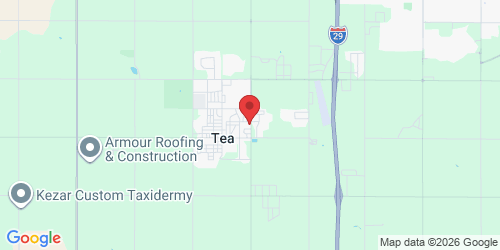
Red Arbor Tattoo is located at 315 N Heritage Pkwy in Tea, South Dakota, a few minutes south of Sioux Falls. If you know where the Casey’s is on Heritage Pkwy, you’re about thirty seconds from the door.
The shop is open Tuesday through Saturday, 10 AM to 8 PM. Walk-ins are welcome on a first come, first served basis, but appointments always come first. Booking ahead guarantees a spot with the right artist and gives the artist time to prepare the design before appointment day.
For American traditional work specifically, Cory Claussen and Aiden Pearson both have deep roots in the style. Cory brings over a decade of tattooing experience with a specialty in American traditional, Japanese traditional, and large-scale ornamental work. Aiden focuses on American traditional and hand-painted flash. She’s newer to the profession but serious about the craft and the history behind it. The rest of the Red Arbor team, including Libby Murphy, Savannah Layne, Mia, and Lauren, all do strong work and bring their own strengths to every piece.
Red Arbor holds a 4.9 Google rating and consultations are always free. Contact Red Arbor Tattoo to book a consultation and talk about your project, whether it’s a single traditional piece, a sleeve, or something you’re still figuring out.
Frequently Asked Questions About American Traditional Tattoos
How Much Does an American Traditional Tattoo Cost?
Depends on size, detail, placement, and which artist you’re working with. A small piece off the flash wall is going to be a lot less than a full sleeve, that’s probably obvious, but people ask. At Red Arbor, half sleeves typically run $2,500 to $5,000 and full sleeves land in the $5,000 to $10,000+ range. Best way to get a number that means something is to come in for a free consultation. We’ll look at what you want, where you want it, and give you a straight answer.
Do American Traditional Tattoos Age Well?
Better than almost any other style. The bold outlines and solid color packing are specifically what make them hold up over decades. Styles with thin lines and soft shading tend to blur and fade faster. Look at healed traditional work from ten, twenty, thirty years ago and compare it to other styles at the same age. The difference is obvious. These tattoos were built to last from the beginning, and that hasn’t changed.
What’s the Difference Between American Traditional and Japanese Traditional Tattoos?
Both use bold outlines and both hold up well over time, but the approach is pretty different. American traditional uses a small, fixed set of designs, flash, with a limited color palette and simpler compositions. Japanese traditional, or irezumi, uses more complex compositions with heavy background work like waves, wind bars, and clouds, and the designs usually cover large areas of the body as connected pieces rather than individual standalone tattoos. Red Arbor does both styles. Cory has a deep background in Japanese traditional as well as American, so if you’re not sure which direction to go, that’s a good conversation to have at a consultation.
Can I Get a Traditional Tattoo as a Walk-In?
Yeah, walk-ins are welcome at Red Arbor. First come, first served. But if you want a specific artist, or if you want a larger or custom piece, booking ahead is a better move. Walk-in availability depends on the day, the artist, and what’s already on the schedule. For small flash pieces, walk-ins work great. For bigger projects, book a consultation first so nobody’s rushing.
How Long Does an American Traditional Tattoo Take to Heal?
Surface healing usually takes two to three weeks. Full healing, meaning all the layers of skin have settled and the color looks how it’s going to look long-term, is closer to four to six weeks. Follow whatever aftercare instructions your artist gives you. Don’t pick at it, don’t soak it, keep it clean, and use plain unscented lotion. Stay away from Vaseline and anything with fragrance in it. The scented lotions from Bath and Body Works, the petroleum-heavy stuff, all of it. Fragrance and petroleum-heavy products can pull ink and irritate healing skin. Check out the Red Arbor aftercare guide for the full rundown.
What Is Traditional Tattoo Flash?
Flash is pre-drawn designs, usually painted on sheets and displayed on the walls of a tattoo shop. Artists drew the designs ahead of time so clients could walk in, point at something on the wall, and sit down. Lew Alberts out of New York’s Bowery is widely credited with popularizing flash in the early 1900s, and Percy Waters built a mail-order supply business out of Detroit that spread those designs to shops across the country. Flash is still a big part of the traditional tattoo world, and Aiden at Red Arbor hand-paints flash sheets that are specific to the shop. Flash pieces are usually quicker to tattoo and cost less than fully custom work, which makes them a good option if you want something traditional and you’re open on the specific design.