Forearm Tattoos | Designs, Pain, Cost, and Placement Tips
Forearm tattoos
Why the forearm
Okay so the forearm. Everybody gets their forearm tattooed. And I mean everybody. It's been one of the most common placements in tattooing for decades and the reasons are boring but practical. The forearm is flatter than most other body parts you could tattoo. Not perfectly flat, nothing on a human body is, but compared to ribs, which curve and dip and make the artist's job harder in about six different ways, or a kneecap, where the skin is stretched tight over bone and moves every time the leg bends, the forearm is cooperative. Wrist on one end, elbow on the other, and enough space between them that the artist has a natural frame to fill.
And then there's the visibility factor. You can see your own forearm all day. Other people can see it too. But when you need it hidden, one button-down and it's gone. Living in South Dakota, you've already got long sleeves in the closet for the seven months of winter that starts in October and sometimes doesn't let go until May, so the "can I cover it" question answers itself.
Pain. Everyone asks about the pain before anything else, sometimes before they even say what they want. The outside of the forearm has thicker skin and a little more meat on it than spots like ribs or spine. I'm not going to say it doesn't hurt because a needle is going into your skin thousands of times a minute and that's never going to feel like a massage. But if you've been putting off a tattoo because you're nervous about pain and you're picking the outer forearm, you picked a reasonable starting point. Compared to getting your kneecap done this is like the bunny slope at Great Bear.
Inner arm or outer arm
Most people don't think about this until the consultation and by then the artist is asking them and they're staring at their own arm like they've never seen it before. So think about it now.
Your inner forearm is the soft side. The side you see when you flip your hand palm-up and look down. You see this part of your arm constantly. Holding your phone. Eating lunch. Resting your arm on the center console during the forty-minute drive from Sioux Falls to Yankton on Highway 50. That constant visibility is why people tend to put personal stuff here. Names. Dates. Short pieces of script. Small portraits. Symbols that mean something specific. You're the primary audience for your own inner forearm, and most of what goes there reflects that.
The skin there is thinner though, and more sensitive. You'll feel the needle more on the inner forearm than the outer, and it gets progressively worse as you move toward the wrist and especially up near the elbow crease, which is its own special experience that I'll just describe as "not great." Fine line work does well on the inner forearm because the skin surface is smooth. But that crease area where the arm bends is tricky during healing because the skin moves every single time you straighten or bend your arm. Every time you reach for a door handle. Every time you grab a gallon of milk out of the fridge. The tattoo has to heal through all of that movement and if you're not careful with aftercare it shows.
The outer forearm is the other side. The part that faces out when your arms hang relaxed. This is what the person behind you at the Hy-Vee on Louise Avenue sees while you're waiting to check out. What shows up in every group photo at a wedding. The outer forearm is where tattoos face outward, which means they get seen by other people more than by you, which changes what tends to go there. Bold work. Traditional pieces. Bigger compositions that read well from a few feet away. The surface on the outer forearm is a little flatter, a little more forgiving, and there's more room to spread a design out without it feeling crammed. Not a huge difference from the inner side, maybe an inch of extra width on most arms, but that inch matters when the artist is trying to fit a composition that needs breathing room.
Different arm sizes need different designs
This comes up every single day in the shop and most clients don't think about it until the artist brings it up.
Someone with a big forearm, a lot of muscle mass or just a naturally wide frame, has room. Larger compositions fit without getting crowded. More detail fits. Half sleeve builds running from the wrist up past the elbow work well on bigger arms because the surface area is there and the design can spread out and breathe.
But take that same design and try to put it on an arm that's, I don't know, two-thirds the circumference. It falls apart. Everything compresses. The spacing between elements closes up. Details that looked clean at the original scale turn muddy when they're reduced. And the fix isn't just shrinking it, because shrinking a design doesn't fix the proportions, it just makes the same problems smaller. The actual fix is redesigning for the arm it's going on. Different elements, different spacing, different composition entirely. Delicate line work, floral wraps, single-element designs, script, these tend to do well on thinner forearms because they work with the proportions instead of against them. Some of the best forearm tattoos Cory has done have been on narrower arms where the design and the arm were perfectly scaled to each other. The proportional match is what makes it look right.
Can a forearm piece become a sleeve later?
This is probably the most common way sleeves get started at Red Arbor, and Cory has watched it play out enough times to have a standard speech about it. Someone comes in for a forearm piece. They love it. Six months or a year later they're back asking about pushing it up past the elbow. Year after that they're working on a full sleeve. That slow build from "just a forearm thing" to "okay I want the whole arm done" plays out over and over.
But here's the part that's worth hearing before that first forearm session. If there is any chance, even a small one, even if you're only like 15% sure, that you might want more later, say something. Mention it during the consultation. Because the artist can design the forearm piece with expansion in mind. Edges that don't dead-end. A style that connects easily to future work up the arm. Composition that leaves room on the upper arm for whatever comes next, even if what comes next is "nothing, I'm done," which is also fine.
The people who mention the possibility early end up with cleaner, more cohesive sleeves down the road. The people who don't mention it, and there are a lot of them, end up with a forearm tattoo that the artist has to awkwardly design around later when the client comes back wanting more. Both are fixable. One is cheaper, faster, and looks better.
Forearm tattoo questions
What does a forearm tattoo cost?
Depends on size and detail. A small inner forearm piece, a name or a single symbol, could be a few hundred bucks. A full forearm wrap, wrist to elbow, or a half sleeve build running up the arm, you're in the $2,500 to $5,000 range at Red Arbor. Cory's day rate is $2,500 for eight hours. Best way to get a number for your specific idea is to book through the contact page. Bring references. Photos, screenshots, whatever. The more the artist can see what you're picturing, the better the estimate.
Do forearm tattoos hurt?
Outer forearm is one of the friendlier spots on the body. Inner forearm gets worse, especially near the wrist and that elbow crease area where the skin is thin and the nerve endings are closer to the surface. Overall though, the forearm ranks low to moderate on the pain scale compared to ribs, sternum, spine, and kneecaps. If the forearm is your first tattoo you picked a smart spot. If you've already had your ribs done and you're asking about forearm pain, it's like asking whether a kiddie pool is deep after you've already been swimming in the ocean.
How do forearm tattoos hold up over the years?
The forearm gets more sun than most body parts. Short sleeve shirt, forearm is exposed. T-shirt, forearm is exposed. Basically anything except a long sleeve and your forearm is taking UV. And sun is the number one thing that breaks tattoos down over time. Bold lines and solid color hold up best because there's more ink in the skin and it takes longer for UV to degrade it. Very fine lines with light shading fade faster, especially on sun-exposed spots. If you want your forearm tattoo to look good in twenty years, two things. Sunscreen, every time you're outside for more than twenty minutes. And moisturizer. That's 90% of long-term tattoo care. Not complicated. Just consistent. And most people are not consistent, which is why you see so many faded forearm tattoos walking around out there.
Can I hide a forearm tattoo for work?
So this depends on what you wear. One long sleeve, any long sleeve, a button-down or a sweater or a flannel or whatever, and the forearm is covered completely. That part is easy. The trickier part is rolled sleeves and pushed-up sleeves, which is how most people actually wear long sleeves indoors because offices are warm and nobody wants to sit in a meeting in a buttoned-up Oxford feeling like they're in a sauna. If the tattoo sits low near the wrist, a rolled sleeve still covers it. If it sits higher, mid-forearm or above, a rolled sleeve might expose part of it. If that matters, and for some jobs it does, bring it up at the consultation. Cory can shift the placement by an inch or two so it tucks under a rolled cuff. Small adjustment. Big difference if your office has opinions about visible ink.
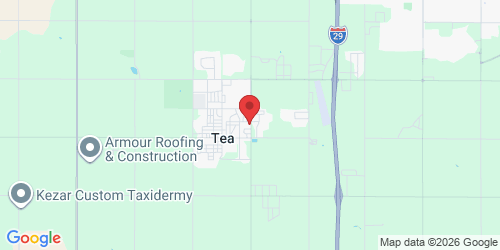
Red Arbor Tattoo. Tea, South Dakota. Ten minutes south of Sioux Falls, right off Heritage Parkway. If you know where the Casey's is on Heritage you're about thirty seconds from the door. Forearm pieces, sleeve builds, whatever the plan is. Contact page or (605) 408-0837.