
How Much Does a Tattoo Cost | Tattoo Pricing at Red Arbor Tattoo
What you're going to spend on a tattoo
Everybody wants a number. Here's the problem with giving you one.
A tattoo can cost two hundred bucks. A tattoo can also cost more than a house in some parts of South Dakota. That's not a useful range. It's like asking how much dinner costs and someone says "somewhere between a McDouble and a private chef." So instead of throwing out a range that means nothing, here's how pricing works at one specific shop.
Cory Claussen at Red Arbor Tattoo charges a day rate. $2,500. That's for an eight-hour session and it covers everything, the time in the chair, the design work beforehand, all the supplies. No hourly clock running in the background. No surprise add-ons at the end. You know what the visit costs before you show up, which, if you've ever sat in a dentist's chair wondering what each individual thing they're doing is going to add to the bill, you understand why that matters.
Most large projects at Red Arbor are priced by the session. Not by the hour. The session approach keeps it simple. You book a day. You show up. You sit for however long you can handle, up to eight hours. You pay the same amount whether you sat for six hours or seven and a half. No mental math. No anxiety about the meter running.
So what makes one tattoo cost more than another?
Couple things going on at the same time. How long the tattoo takes, how complicated the design gets, and which part of your body you want it on. And these three things mess with each other in ways that are hard to predict from the outside, which is why "how much for a sleeve" is a question that doesn't have a clean answer until the artist sees your arm and hears what you want.
Time is the biggest driver by far. A small tattoo that takes an hour costs less than a sleeve session that takes all day. That part makes sense to everybody. But time gets affected by stuff the client doesn't think about. Skin texture changes from one body part to another, sometimes dramatically, on the same person. The skin on your outer forearm and the skin on your inner elbow are barely the same material as far as a tattoo needle is concerned. Some spots grab ink immediately. Some spots fight it.
And then there's bony areas. Elbows. Kneecaps. Ribs. The spine. Those slow everything down because the skin is thinner, there's less padding underneath, and the client needs more breaks because it hurts more. More breaks means more time. More time means more sessions. More sessions means higher total cost. Not because the artist is charging extra. Because the body is making the work take longer.
Design complexity is the other factor. A solid black silhouette, something with no shading and no color, is fast. A fully shaded portrait with realistic skin tones and hair detail is slow. A geometric pattern where every single line has to be ruler-straight takes a specific kind of focus that burns through time even though the design might look "simple" on paper. And color. Every additional color adds time because the artist has to switch equipment, mix or select the right shade, and layer carefully. A black and grey piece and a full-color piece of the same size are not the same amount of work.
Actual numbers for sleeves, half sleeves, and large projects
These are Red Arbor numbers. Cory's rates. Other shops price differently and I can't speak to those.
Half sleeves. $2,500 to $5,000. Two sessions in most cases, maybe three if the detail is heavy or the client's skin needs extra healing time between rounds. Upper arm shoulder to elbow, or lower arm elbow to wrist, same ballpark either way.
Full sleeves. $5,000 to $10,000, and sometimes north of that if you're going very detailed or photorealistic or if, and this does happen, the client's skin responds differently on different parts of the arm and the artist needs extra sessions to account for that. Cory has finished full sleeves in four sessions. He's also done them in eight. Style, detail, and skin are the variables.
Body suits. This is where the number jumps and every time Cory says it out loud in a consultation you can see the person doing math in their head. $100,000 and up. It's a project that takes years, not months. On the fast side you're looking at 37 to 41 sessions, which sounds like a lot until you do the math and realize that's nine or ten months if you could book one every two weeks with perfect healing in between, and you can't, because life shows up. Rescheduled sessions, a week where you're sick, a vacation, whatever. Realistically it stretches. On the longer end, 80 or more sessions. Between 290 and 340 total hours in the chair. For context, if you drove from Sioux Falls to New York City and back, and then did it again, you'd spend roughly the same amount of time in a vehicle as a body suit client spends getting tattooed. That's the scale of the commitment.
Cover-ups. This one is simpler than people expect. A cover-up does not always cost more than starting fresh. If the old tattoo is light and small, covering it might be basically the same process as a new piece. If the old tattoo is dark, dense, and takes up a lot of space, the redesign takes more time and sometimes more sessions because the artist is working around ink that's already there instead of starting on a blank canvas. Bring photos to the consultation and you'll get a straight answer.
Why nearly everyone ends up spending more than they planned
This happens constantly and it's not because the price changes. The project changes.
Someone comes in asking about a half sleeve. They're thinking $2,500, two sessions, done. During the consultation Cory looks at their arm and shows them how extending the design down past the elbow, just three or four more inches, would balance the whole composition. The proportions look better. The flow looks better. So they go for it. Now it's three sessions instead of two. That $3,000 half sleeve just became a $6,000 project. But the client chose that. Nobody pushed.
This pattern shows up most with sleeves. Red Arbor's data, actual numbers from actual clients, shows sleeve clients spend about three times what they originally came in asking about. Someone walks in thinking half sleeve, walks out planning a full sleeve. Someone walks in thinking full sleeve, walks out adding chest panel work. And it's not because anyone is pressuring them. They see what's possible once the design starts taking shape and they want more of it. Same thing that happens when you go to IKEA for a shelf and leave with a shelf, a lamp, new curtains, and a bag of Swedish meatballs. Except this is permanent and goes on your body so ideally you're thinking harder about it than the IKEA trip.
And what is the money actually buying? Not ink. Not hours in a chair. There's peer-reviewed research on this, published in actual journals, not someone's Wordpress blog with a stock photo header. Tattooing is linked to measurably higher self-esteem and reduced appearance anxiety. Three mechanisms keep showing up in the data. The person chose it. They own it. And nobody else has the same one. Agency, ownership, uniqueness. That combination does something to how people experience their own body, and the studies show it doesn't fade over time. It compounds. Each tattoo adds to it. When someone at the grocery store comments on your sleeve, or your coworker notices the new session healed, that feedback accelerates the whole cycle. That's the outcome the money goes toward.
What if the budget is tight?
Tell your artist what you can spend. Name the dollar amount. Don't hedge it, don't round up to sound less cheap, just say the real number. A good artist can build a plan that fits inside a budget. Maybe the design gets simplified a little. Maybe you go smaller than you originally imagined. Maybe the project gets spread across more sessions over a longer timeline so each individual visit is manageable. None of those are bad outcomes. Different path, same destination.
But here is the one move to avoid and I mean this. Do not pick a shop because it's the cheapest option you could find on Google Maps. A bad tattoo is not a $200 problem that stays a $200 problem. It becomes a cover-up project later, and cover-ups take more planning, more time, and more sessions than starting fresh because the artist has to design around ink that's already healed into the skin. That $200 bargain turns into a $2,500 fix, and that math only works in one direction.
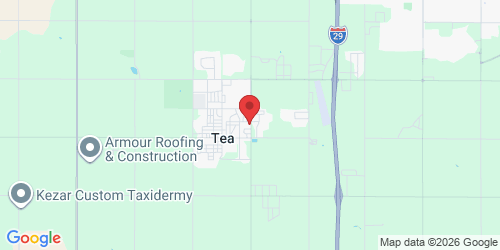
Red Arbor Tattoo. Tea, South Dakota. If you know where the Casey's is on Heritage Parkway you're about thirty seconds from the door. Come in, talk numbers, leave with a plan that fits. Contact page or (605) 408-0837.