Sleeve Tattoos | Full, Half, and Quarter Sleeve Guide
Everything you need to know before you get a sleeve
So you want a sleeve
A sleeve is a big tattoo. Or a bunch of tattoos that connect into one big tattoo. Either way it covers most or all of the arm, shoulder to wrist for a full sleeve, shoulder to elbow or elbow to wrist for a half, and shoulder to about mid-bicep for a quarter sleeve. Leg sleeves are the same concept but on the leg, hip to ankle or any chunk of that.
Some people plan the whole sleeve from day one. They walk in with a concept, the artist designs it as one connected piece, and they execute it over multiple sessions. Other people build a sleeve accidentally over a decade. Got a shoulder piece after college. Added a forearm thing a few years later. Woke up one morning at thirty and realized there was a six-inch gap on their bicep that looked weird and now they're in a consultation asking how to connect all of it. That second path works fine but it usually requires cleanup sessions to tie everything together with background work, and that costs extra time and money that planning ahead would have saved.
What changes once you have a sleeve
Here's the thing nobody talks about and it's backed by actual data. Getting tattooed, and a sleeve especially because of how visible it is, does something measurable to how you experience your own appearance. There are published studies on this, in actual peer-reviewed journals, the kind with DOI numbers and methodology sections that put you to sleep. And they've found, repeatedly, that tattooed individuals report higher self-esteem and lower anxiety about how they look. Not a temporary buzz that wears off after a month when the novelty fades. The opposite. It gets stronger. Compounds over time. Compounds with each additional tattoo. And when someone at Target notices your sleeve while you're buying paper towels and says something about it, that external feedback speeds the whole thing up.
A sleeve shows at a wedding. It shows at the grocery store. It shows at a job interview if your sleeves are rolled. That level of visibility is part of why it works the way it does. It's not a secret tattoo on your ribcage that only you and your significant other know about. It's public. And choosing to be public about something permanent on your body does something to how you carry yourself. I'm not going to make claims about what every person feels because I don't know every person. But the research keeps coming back with the same finding and at some point you stop calling it a coincidence.
How many sessions and how much of your life does this take?
Full sleeve. Four to ten sessions depending on how detailed the design is, what style you're going with, and how your skin responds. Each of Cory's sessions runs up to eight hours. So that's four to ten full days in the chair, spread out over months, sometimes over a year. Each session needs two to four weeks of healing before the next one, minimum, and if you rush that, if you come in before the skin is fully healed because you're impatient and want to see it finished, you're going to damage the work and the final result will show it. This is one of those things where being patient pays off in a way you can literally see on your body for the rest of your life. Like waiting for paint to dry before the second coat, except if you don't wait the paint gets into your skin and it's permanent and you've got a problem.
Half sleeves. Two to four sessions usually. Maybe less if the design is simple and the client sits well.
Quarter sleeves. One or two sessions. Sometimes just one long one.
Leg sleeves. So legs are bigger than arms. That sounds obvious but people don't think about it when they're pricing out a leg sleeve. A full leg from hip to ankle has significantly more skin to cover than a full arm from shoulder to wrist. More skin means more sessions. A full arm sleeve might be five sessions. A full leg sleeve of similar detail might be seven or eight. The surface area difference is real and it shows up in the session count and the total cost.
What a sleeve costs at Red Arbor
Cory's day rate is $2,500 for eight hours. Everything is priced by the session. So the math looks like this.
A half sleeve is two to three sessions. That puts you at $2,500 to about $5,000 depending on how many days it takes to finish. Could be two days if the design is straightforward and you sit like a rock. Could be three if it's detailed or if you need more breaks. Some people can sit for eight hours straight, and I mean literally not moving, which is wild. Other people need to get up every ninety minutes. Both are normal. The break schedule just affects how much gets done per session.
A full sleeve is more like three to six sessions. $5,000 to $10,000 range, sometimes higher if you're going photorealistic or extremely dense with detail. Cory has knocked out full sleeves in four sessions with clients who sat well and had designs that moved fast. He's also done full sleeves that took eight sessions because the detail level was high and the client's skin on the inner arm responded differently than the outer arm, which slowed things down in ways nobody could have predicted at the consultation.
Body suits. $100,000 and up. That's not a typo. A full body suit is 37 to 41 sessions on the fast end, and that's fast. Like, everything goes perfectly, healing is quick, no sessions get rescheduled, the client shows up every two to three weeks like clockwork. On the longer end, 80 or more sessions. 290 to 340 total hours of tattooing. For context, that's roughly the same amount of time it takes to drive from Sioux Falls to New York City and back. Twice.
And the thing about sleeves specifically, Red Arbor's data shows this consistently, is that most sleeve clients end up spending about three times what they originally asked about. Someone comes in thinking half sleeve, $2,500, two sessions. During the consultation they see how extending it past the elbow improves the composition. Now it's a three-quarter sleeve. Now it's three or four sessions. $3,000 plan became a $7,000 project. But the client chose that because they could see the difference. Nobody pushed them.
Planning a sleeve with your artist
Bring whatever you've got to the consultation. Screenshots from Instagram, photos you saved on your phone six months ago, sketches on notebook paper, a Pinterest board, a vague idea you can only describe verbally. All of it works as a starting point. Even if what you bring is "I want a Japanese sleeve but I don't know what specifically," that's enough to start the conversation.
What happens next is the artist looks at your actual arm. Not the photos. Your arm. Because, and this is the thing most people don't think about until someone points it out, a design on a flat screen and a tattoo on a round arm are completely different things. Something that looks incredible on an iPad can wrap terribly around a bicep, bunch up at the elbow, or stretch weird across the shoulder cap. The artist's job is to figure all of that out before the needle starts. That's what you're paying for in the consultation and the design phase, not just a cool drawing but a cool drawing that works on your specific body.
After the design is agreed on, you map out the sessions together. The outline usually goes down first. Next session is shading. Session after that, color or finishing detail, depending on the style. But honestly it doesn't always break down that cleanly. Sometimes Cory outlines and shades the upper arm in one session, then does the same on the forearm in the next. It depends on the design and where the natural stopping points are. Between sessions you keep it clean, stay out of the sun, let it heal all the way before coming back. Your artist will tell you exactly what to do for aftercare. Follow those instructions. The gap between a sleeve that healed well and one where the client cut corners on aftercare is visible. And permanent.
Sleeve styles and who does what at Red Arbor
American traditional. This is the one your grandfather might have had if he was in the Navy in the 1950s. Heavy outlines. Flat color fills in a limited palette, mostly reds and greens and yellows and black. Eagles, roses, daggers, anchors, ships, panthers. The imagery goes back over a hundred years, and the reason traditional sleeves still look good after decades on the skin is the line weight. Those thick outlines don't blur. They hold. Aiden at Red Arbor does American traditional and hand-paints flash sheets for the shop, which, if you haven't seen hand-painted flash in person, go look at Aiden's work. It's a completely different thing than digital flash.
Japanese. This is Cory's lane. Traditional Japanese-inspired ornamental tattooing. Irezumi. Waves, koi, dragons, cherry blossoms, wind bars, all of it designed to flow with the body instead of sitting flat on the surface. Japanese sleeves are built differently than other styles because the composition wraps the entire arm as one continuous scene rather than a collection of separate images placed next to each other. Cory has been doing large-scale Japanese work for over 18 years across two continents, three countries, and more than 26 states. If Japanese is what you want, that's his thing.
Neo-traditional. Takes the bones of American traditional, the bold outlines and the solid structure, and adds a wider color range, more shading depth, and more complex compositions. It's the modern evolution of traditional. Mia at Red Arbor works in both traditional and neo-traditional.
Black and grey. No color palette. Just the full range from solid black down to the lightest grey, built through dilution and shading technique and a lot of patience. Works for portraits, landscapes, illustrative pieces, anything where you want depth and realism without committing to color. Lauren at Red Arbor does black and grey illustrative work and if you scroll her portfolio you'll see what two tones can do when the shading is right.
Floral. Roses, peonies, lotuses, wildflowers, birth flowers, botanical scenes. Floral comes up in more consultations at Red Arbor than any other category, and floral sleeves specifically are something the team builds regularly. You can do a floral sleeve in any of the styles listed above, which is part of why it keeps coming up. A bold traditional rose sleeve and a fine line wildflower sleeve are both "floral" but they're completely different tattoos.
Questions people ask about sleeves
How long until a sleeve is finished?
Style and detail determine the timeline but for a full sleeve you're in the four-to-ten-session range, each one six to eight hours, with two to four weeks of healing between visits. Fastest realistic timeline is a few months if you book back to back. More common timeline is six months to a year because sessions get rescheduled, life gets busy, and healing sometimes takes longer than expected especially if you're not staying out of the sun.
Can existing tattoos become a sleeve?
Yeah and this is actually one of the more common ways sleeves get started at Red Arbor. Someone has two or three pieces on the arm already, they want to connect them. The artist designs around what's there, fills the gaps with background and filler work, and when it's done, if it's done right, it looks like the whole thing was planned from the start. Key word is "if it's done right." Bring good photos to the consultation. Clear, well-lit, multiple angles. A blurry photo from your bathroom mirror at 10pm does not help the artist plan.
Does a sleeve hurt?
Yes. And some spots hurt more than others but that's true with all tattoos everywhere on the body, not specific to sleeves. Outer arm and shoulder are the friendliest spots. The inner arm from mid-bicep down to the elbow ditch gets worse. The ditch itself, where your arm bends, is rough. And then the armpit area, which most people describe using words I can't type here. But honestly the biggest factor in sleeve discomfort isn't where the needle is, it's how long you've been sitting. Eight hours is a long time to hold still. Your back locks up around hour four. Your neck starts complaining. Sitting still that long gets like being on hour three of a road trip where your back starts screaming louder than a death metal concert. Breaks help. Your artist will work with you on pacing.
Upper arm or lower arm for a half sleeve?
Upper arm, shoulder to elbow, is more common and the reason is practical. A regular t-shirt covers it. A dress shirt covers it. If you need to hide your tattoos for work or family events or a court appearance or whatever the reason is, an upper arm half sleeve disappears under one layer of fabric. Lower arm, elbow to wrist, is visible every time you wear a short sleeve shirt. Every time. Some people want that visibility and plan for it. Some people don't think about it until after the tattoo is healed and they're at a work event in July realizing their arm is on display. If visibility matters in any direction, bring it up at the consultation. Cory can talk through the tradeoffs.
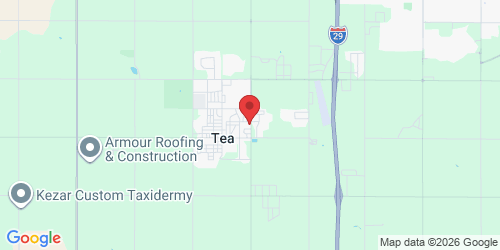
Red Arbor Tattoo is in Tea, South Dakota. If you know where the Casey's is on Heritage Parkway you're about thirty seconds from the door. Ten minutes south of Sioux Falls. Clients come from Sioux Falls, Omaha, Minneapolis, Yankton, Vermillion, Harrisburg, Brandon, all over. Contact page is the starting point. Or call (605) 408-0837.